
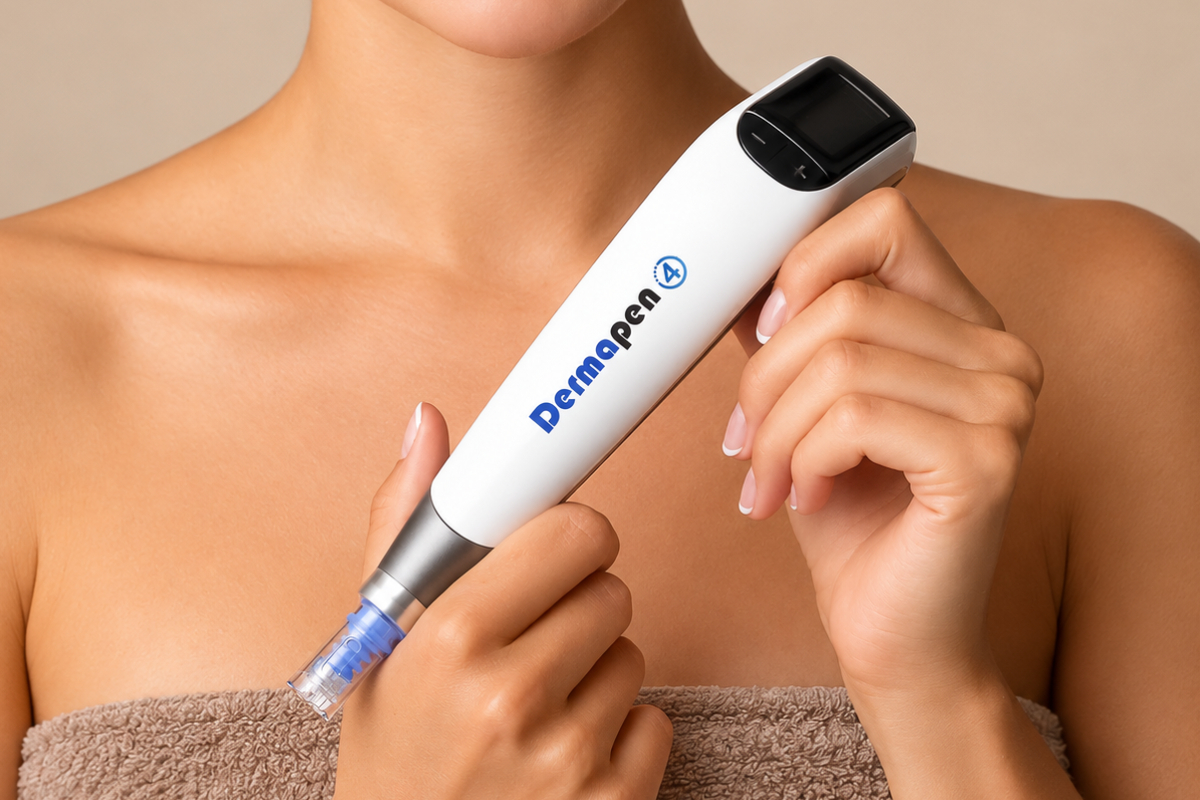
Dermapen 4 — Microneedling
When texture is the concern, care goes deeper.
Indented scars on your cheeks, noticeable pores and unevenness that shows even under makeup may concern you more than your skin tone itself. Dermapen 4 targets the skin’s structure, stimulating its natural repair process to gradually improve the appearance of scars and the surface of the face.
The device uses microneedles to create small, controlled punctures. The skin’s response stimulates collagen formation and remodelling, helping to soften the appearance of certain atrophic scars, irregularities and fine lines. Changes develop over time as the skin recovers and remodels.
A deep indentation and a superficial irregularity do not require the same approach. During the assessment, the type of scarring, treatment areas and appropriate treatment intensity are determined. Sessions are planned on this basis, along with a combination of other procedures when needed. The aim is a measurable improvement in the appearance of the skin, with realistic expectations about what can be achieved.
Softening of atrophic acne scars
The indentations left by acne can make the skin’s surface look uneven. Collagen remodelling may help soften their appearance. Improvement depends on the shape and depth of the scars; some require combination treatments.
Improvement in uneven texture
When surface irregularities are the concern, microneedling may help create a more even texture. Results develop gradually throughout the course of treatment and are assessed after recovery.
Reduced visibility of pores
Improving the skin’s structure may make pores appear less prominent. This helps improve the overall appearance of the surface without eliminating or permanently closing pores.
Softening of fine lines and mild wrinkles
Stimulating collagen formation may help improve certain superficial lines. The benefit is assessed according to the condition of the skin and differs from that of treatments that act on the muscles responsible for facial expressions.
Improvement in the appearance of stretch marks and selected scars
In suitable areas and cases, Dermapen may soften their texture and reduce their visibility. Treatment aims for improvement rather than complete removal; suitability is determined by the type of scar and how the skin heals.
Atrophic acne scars, such as indentations in the skin.
Irregularities and uneven texture.
Visible pores.
Fine lines and mild wrinkles.
Selected scars following injuries or procedures.
Stretch marks in areas suitable for treatment.
Frequently Asked Questions
How does Dermapen 4 work on the skin?
The microneedles create controlled punctures that activate the natural repair response. Collagen formation and remodelling may improve the skin’s structure, so changes appear gradually.
How many sessions are needed, and when is improvement noticeable?
A course of sessions is usually planned, with intervals that allow for recovery. Changes may begin to become visible over the weeks, while remodelling continues for months. The number of sessions depends on the type of concern, treatment intensity and individual response.
Can I have treatment with active acne, or combine it with PRP?
Scars left by acne are assessed separately from active breakouts. Inflammatory acne, infections or open lesions may require the session to be postponed. In suitable cases, Dermapen may be combined with PRP; the decision is based on the condition of the skin and the aim of treatment.
Does it hurt, and how long does recovery take?
You may feel a pricking sensation or discomfort; a local anaesthetic may be used for relief following assessment. Redness and sensitivity often settle within a few days, but treatment intensity and the area treated affect recovery time. Swelling, mild bleeding or flaking may also occur.
What should I know before and after treatment?
Inform your practitioner about herpes, infections, a tendency to develop keloids, healing problems, medications and recent procedures. After treatment, follow the guidance on gentle cleansing, hydration and sun protection. Makeup, active skin care products and activities that may cause irritation should be resumed according to professional advice. Risks include infection, herpes reactivation, pigmentation changes or scarring; assessment and sterile, single-use needles help reduce these risks.
